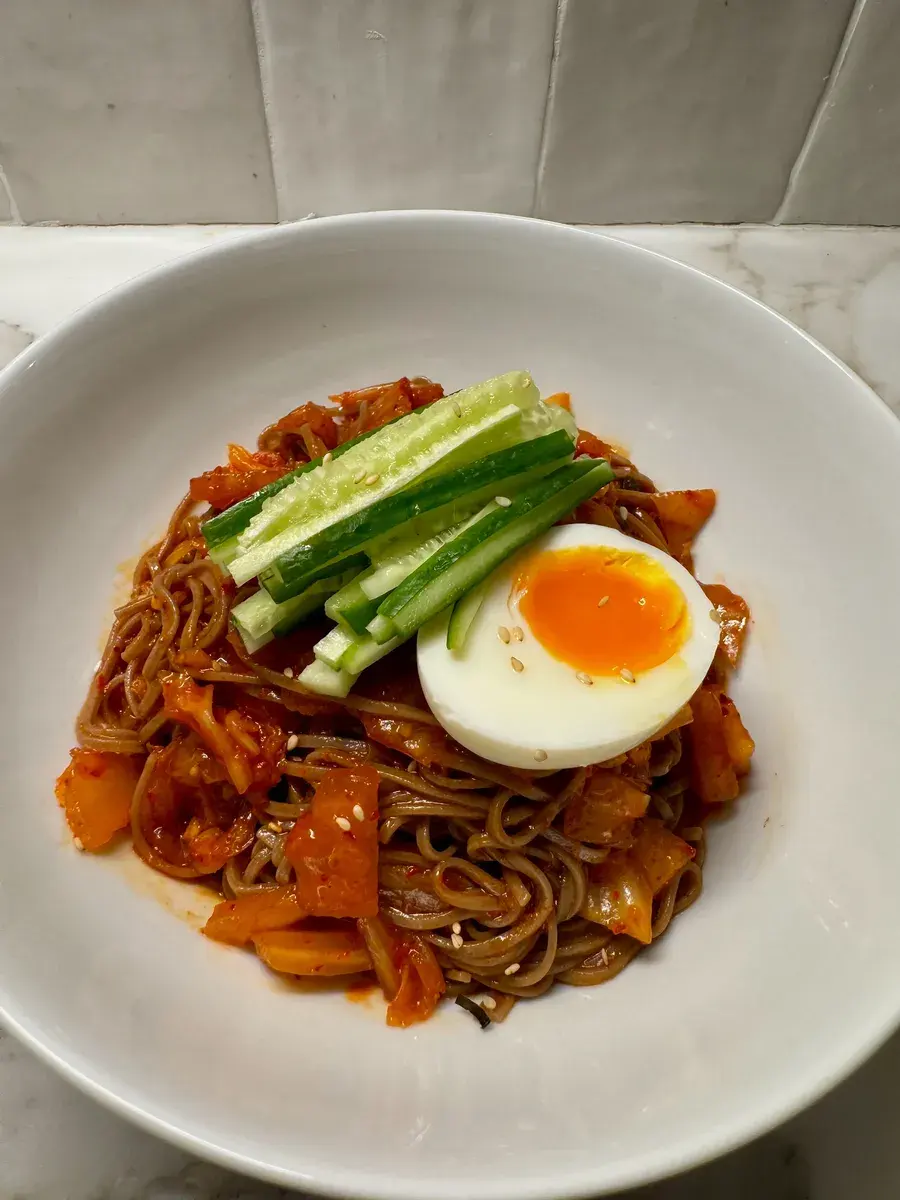
Korean Spicy Mixed Noodles
Bibim guksu (비빔국수)

By David Kim
May 31, 2025, Updated Oct 24, 2026
Share this Recipe
Bibim guksu represents the lighter side of Korean noodle dishes, where thin wheat noodles are tossed in a vibrant, spicy sauce that perfectly balances heat, sweetness, and acidity. This refreshing Korean spicy mixed noodles dish showcases Korea's love for contrasting flavors and temperatures, offering a cool yet spicy noodle dish that's particularly popular during warm summer months.
What makes bibim guksu particularly special is its simplicity and adaptability. Unlike more complex noodle dishes, this one relies on a perfectly balanced sauce and minimal toppings to create a satisfying meal. The combination of cold noodles with the spicy korean red pepper flake (gochugaru)-based sauce demonstrates how Korean cuisine can create exciting flavors with just a few key ingredients.
In modern Korean dining, bibim guksu has become increasingly popular as a quick, light meal option. Whether enjoyed as a simple lunch, late-night meal, or summer dinner, these spicy mixed noodles continue to offer a perfect balance of flavor and satisfaction while being easier to prepare than many other Korean noodle dishes.
Why You'll Love This Recipe
- Quick and easy
- Light yet satisfying
- Perfect summer meal
- Budget-friendly
- Customizable spice level
- Ready in 15 minutes
What is Bibim Guksu?
Bibim guksu (비빔국수) is Korean spicy mixed noodles, featuring thin wheat noodles tossed in a spicy-sweet sauce. The name combines "bibim" (mixed) with "guksu" (noodles), creating a simpler, lighter cousin to the traditional bibimbap.
My Essential Korean Pantry contains several of these ingredients, specifically:- Sempio Soy Sauce
- Kadoya Sesame Oil
- Marukan Rice Vinegar
- Shirakiku Roasted Sesame Seeds
- Taekyung Korean Chili Flakes
- O’Food Mild Gochujang
Need help with what ingredients to stock? Check out My Essential Korean Pantry article. This article describes each essential ingredient with links to where you can buy them easily!
Ingredients
For the Noodles:
For the Sauce:
Instructions
- 1
Cook Noodles: Bring a large pot of water to boil. Add noodles and cook according to package directions until just tender (usually 3-4 minutes for somyeon).
- 2
Cool Noodles: Immediately drain noodles and rinse thoroughly under cold running water until completely cooled. Drain again and set aside in refrigerator.
- 3
Make Sauce: In a mixing bowl, combine kimchi brine, gochujang, rice vinegar, sesame oil, sugar, and minced garlic. Whisk until sugar completely dissolves and sauce is smooth. Adjust seasoning to taste.
- 4
Prepare Toppings: While noodles chill, julienne the cucumber into thin matchsticks. Slice hard-boiled eggs into rounds. Shred seaweed into thin strips. Finely chop the kimchi.
- 5
Assemble: Place chilled noodles in serving bowls. Pour sauce over noodles and toss thoroughly until evenly coated.
- 6
Garnish: Top each bowl with chopped kimchi, cucumber julienne, egg slices, and shredded seaweed. Sprinkle with sesame seeds.
- 7
Serve: Present immediately while noodles are still cold for the best experience.
Recipe Notes
Recipe Tips
- Cook noodles al dente
- Rinse noodles thoroughly
- Adjust sauce to taste
- Use fresh ingredients
- Prepare sauce ahead
- Serve immediately
Serving Suggestions
Serve with:
- Extra gochugaru
- Kimchi
- Cold soup (mul naengmyeon broth)
- Korean side dishes
- Additional vegetables
- Ice-cold water
Variations
- Less spicy version
- Add protein (chicken/tofu)
- Different vegetables
- Cold broth on side
- Extra toppings
- Vegetarian/vegan option
Storage
- Best eaten fresh
- Store components separately
- Sauce keeps 1 week refrigerated
- Don't store mixed noodles
- Make fresh noodles when serving
- Keep vegetables separate
-
-
Nutrition Facts
Per serving
Calculated from the ingredient list with USDA FoodData Central data. Brands and portions change the numbers.