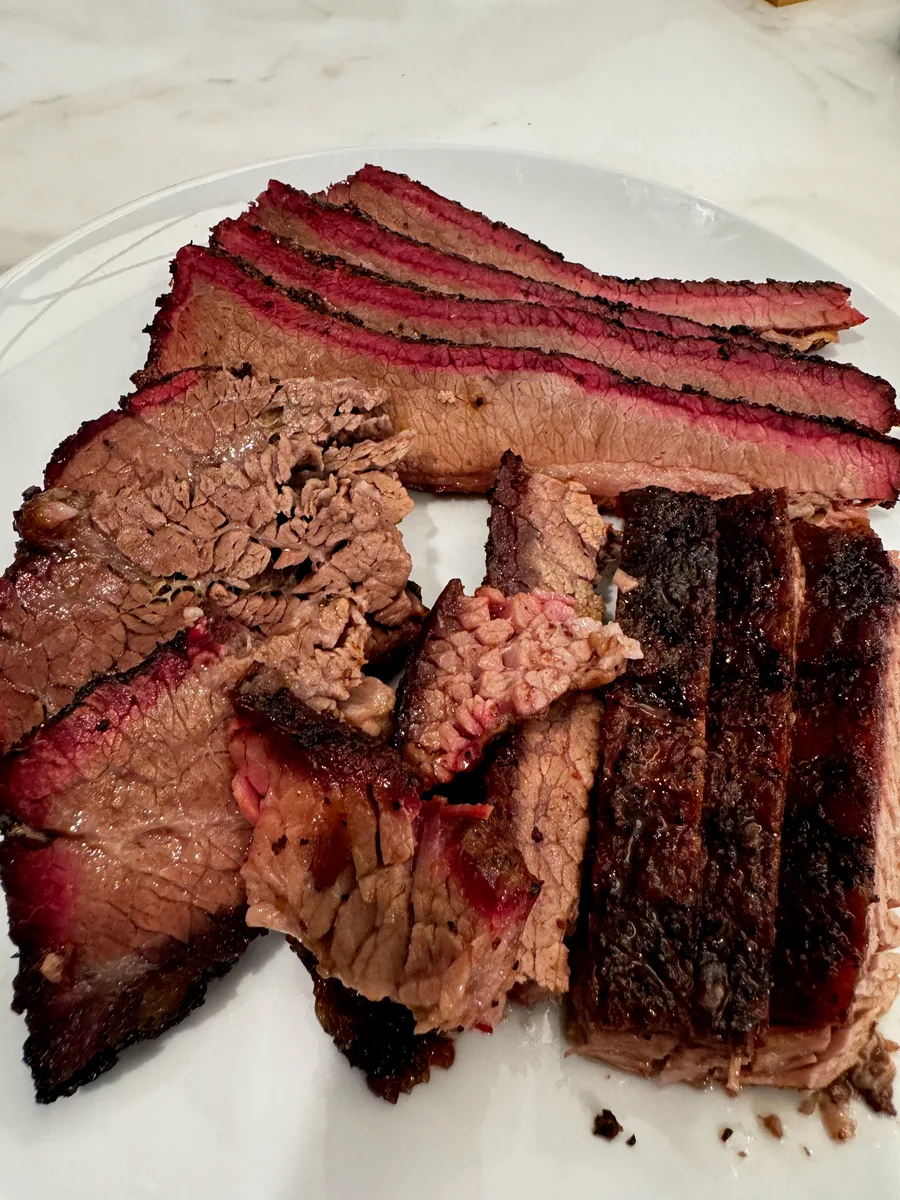
Texas Smoked Spare Ribs
Impossibly good ribs

By David Kim
Jul 05, 2025
Share this Recipe
My obsession with smoked spare ribs reached its peak during a memorable trip to Salt Lick BBQ in Dripping Springs, where I experienced what authentic Texas ribs should taste like. Sitting at those legendary picnic tables under the Texas sky, biting into ribs with perfect bark and meat that pulled cleanly from the bone, I knew I had found my benchmark. The Salt Lick's approach to smoking spare ribs - simple seasonings, clean smoke, and patience - became my blueprint for creating the perfect rack at home. Those weekend drives to Dripping Springs weren't just about the food; they were masterclasses in Central Texas barbecue philosophy.
Texas smoked spare ribs represent the heartier, more robust cousin to baby backs, offering generous marbling and rich flavor that rewards low and slow cooking with incredible tenderness and taste. These full-sized ribs provide the perfect canvas for smoke penetration, developing that coveted bark while the intramuscular fat renders slowly, basting the meat from within. The traditional Texas approach celebrates the pork's natural flavor with a simple yet effective rub that enhances rather than masks, creating ribs that showcase both the quality of the meat and the skill of the pitmaster.
What makes smoked spare ribs particularly special is their forgiving nature combined with spectacular results when done right. The generous fat content and larger size mean they're less likely to dry out than baby backs, while still delivering that perfect balance of smoky bark and tender, juicy meat. The 3-2-1 method (3 hours unwrapped, 2 hours wrapped, 1 hour sauced) has become the gold standard because it reliably produces competition-quality ribs that bend without breaking and pull cleanly from the bone with just the right amount of chew.
In modern barbecue culture, spare ribs have experienced a renaissance as pitmasters and home cooks alike have rediscovered their superior flavor and texture compared to the more popular baby backs. Competition teams swear by spare ribs for their consistency and wow factor, while restaurants feature them as signature items that showcase their smoking prowess. Whether served dry with just the rub's seasoning or glazed with a complementary sauce, properly smoked spare ribs continue to be the ultimate test of a pitmaster's skill and patience.
Why You'll Love This Recipe
- Foolproof method that delivers consistent results every time
- Perfect balance of simple seasonings that complement the pork
- Creates incredible bark while maintaining juicy, tender meat
- Forgiving cut that's ideal for beginners and experts alike
- Impressive presentation that feeds a crowd
- Versatile - delicious with or without sauce
What are Smoked Spare Ribs?
Smoked spare ribs are full-sized pork ribs cut from the belly side of the pig, seasoned with a simple rub and slowly smoked over wood until tender. Unlike baby back ribs, spare ribs are larger, meatier, and have more marbling, which makes them incredibly flavorful and forgiving to smoke. The low and slow cooking process breaks down tough connective tissues while developing a beautiful bark exterior.
Key ingredients from this recipe include:
- Spare ribs
- Coarse black pepper
- Coarse kosher salt
- Sweet paprika
- Yellow mustard
- Apple cider vinegar
Need help with what ingredients to stock? Check out My Essential Korean Pantry article. This article describes each essential ingredient with links to where you can buy them easily!
Ingredients
-
For the Ribs:
-
-
-
For the Rub:
-
-
-
-
For Spritzing:
-
-
-
For Smoking:
-
-
Instructions
- 1
Trim the ribs: Remove excess fat and the sternum cartilage. Optionally remove the membrane from the back of the ribs for more tender results, though some prefer to leave it for structure.
- 2
Prepare the rub: Mix coarse black pepper, kosher salt, and sweet paprika in a bowl, maintaining the 2:1 pepper to salt ratio.
- 3
Apply binder and rub: Coat ribs thoroughly with yellow mustard as a binder. Generously apply the rub to both sides, pressing gently to ensure adhesion. Let ribs rest at room temperature for 30 minutes while preparing the smoker.
- 4
Prepare the smoker: Heat smoker to 250-265°F. Add oak or hickory wood for clean, thin blue smoke. Avoid white, billowy smoke.
- 5
Initial smoke (3 hours): Place ribs in smoker meat-side up, away from direct heat. Maintain steady temperature and clean smoke.
- 6
Spritz regularly: After the first hour, spritz ribs with apple cider vinegar mixture every 45 minutes to maintain moisture and help develop bark.
- 7
Wrap phase (2 hours): After 3 hours, wrap ribs in heavy-duty foil, meat-side down. This helps push through the stall and ensures tenderness.
- 8
Continue smoking: Return wrapped ribs to smoker and cook for additional 2 hours, maintaining temperature.
- 9
Final phase (1 hour): Unwrap ribs and return to smoker for final hour to firm up the bark. Optional: apply sauce during last 30 minutes if desired.
- 10
Check for doneness: Ribs are done when they bend 90 degrees without breaking, bones start to show, and a toothpick slides through easily.
- 11
Rest and serve: Wrap ribs in foil and rest for 15-30 minutes. Slice between bones and serve immediately.
Recipe Notes
RECIPE TIPS
- Choose spare ribs over baby backs for better flavor and forgiveness
- Don't skip the mustard binder - it helps the rub stick and doesn't affect flavor
- Maintain clean blue smoke throughout the cook - white smoke creates bitter flavors
- The "bend test" is more reliable than internal temperature for doneness
- Bones showing about 1/4 inch is a visual cue for doneness
- Avoid opening the smoker unnecessarily - "if you're looking, you're not cooking"
SERVING SUGGESTIONS
- Serve with classic BBQ sides like coleslaw, baked beans, and cornbread
- Offer barbecue sauce on the side rather than drowning the ribs
- Pair with pickles, onions, and white bread for authentic Texas style
- Complement with cold beer or sweet tea
- Include jalapeños for those who like heat
- Serve on butcher paper for that authentic BBQ joint experience
VARIATIONS
- Add garlic powder or onion powder to the rub for extra complexity
- Try different wood combinations like oak and cherry for varied flavor
- Experiment with different vinegars for spritzing (white wine, rice vinegar)
- Apply your favorite BBQ sauce during the last 30 minutes
- Use brown sugar in the rub for a sweeter profile
- Try the 2-2-1 method for slightly different texture
STORAGE
- Wrap leftover ribs tightly in foil and refrigerate for up to 4 days
- Freeze wrapped ribs for up to 3 months
- Reheat gently in 250°F oven wrapped in foil with apple juice
- Slice cold ribs for sandwiches or chop for loaded baked potatoes
- Vacuum seal individual portions for easy reheating
- Save any pan drippings for flavoring beans or other sides
-
Nutrition Facts
Per serving
* Nutritional values are estimates and may vary based on ingredients used.