Spicy Korean Fish Stew
Maeuntang (매운탕)

By David Kim
Jul 24, 2025
Share this Recipe
Growing up, some of my most cherished memories with my Korean grandmother involved watching her transform the remnants of a whole fish into something magical. After we'd enjoyed grilled fish for dinner, she would gather the bones, head, and any leftover meat, declaring that the best part was yet to come. Her maeuntang was a revelation – a fiery, soul-warming stew that proved nothing should ever go to waste in a Korean kitchen. The way she'd carefully balance the heat of gochugaru with the sweetness of vegetables, creating a broth so flavorful it could make you forget the winter cold outside, taught me that Korean cooking is as much about resourcefulness as it is about flavor.
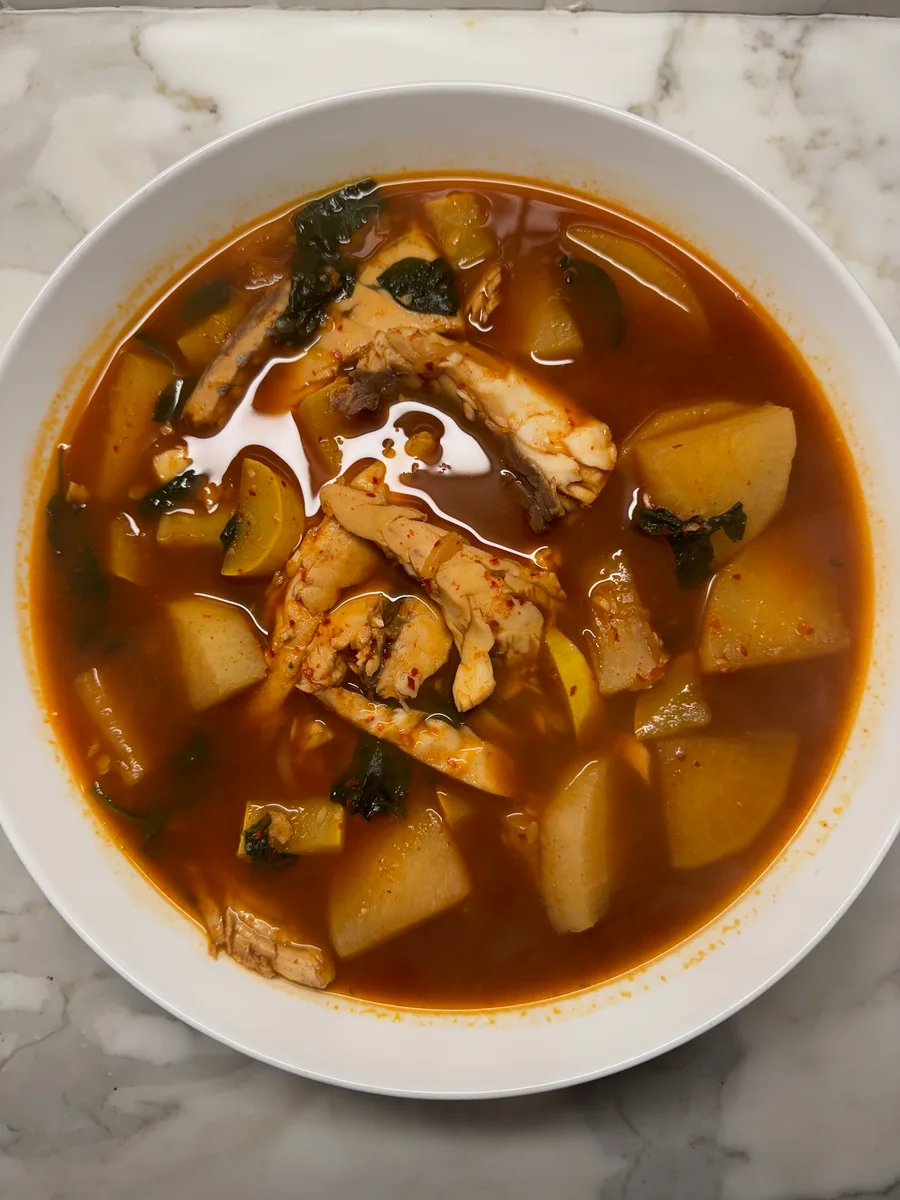
Maeuntang represents the very essence of Korean comfort food, where bold, spicy flavors meet hearty satisfaction in a single, steaming bowl. This iconic fish stew combines fresh fish with an array of vegetables in a robust, chili-laden broth that awakens every sense. The deep red color from Korean red pepper flakes signals the warming heat that follows, while the tender fish and crisp vegetables provide textural contrast that makes each spoonful a complete experience. Unlike mild fish soups from other cuisines, maeuntang embraces boldness, creating a dish that's both nourishing and invigorating.
What makes maeuntang particularly special is its perfect balance of intense heat and complex umami flavors that develop through careful layering of ingredients. The fish provides a clean, oceanic base that absorbs the spicy seasonings beautifully, while vegetables like radish, onions, and bean sprouts add their own subtle sweetness and crunch. The addition of doenjang (soybean paste) creates depth that elevates this from a simple spicy soup to a sophisticated stew worthy of any Korean table. The communal nature of sharing this bubbling pot brings families together, with everyone gathering around to enjoy the warming, restorative qualities that only a well-made maeuntang can provide.
In contemporary Korean dining, maeuntang continues to hold its place as the ultimate comfort food, appearing in everything from casual family dinners to restaurant menus specializing in fresh seafood. Modern variations might include different types of fish or additional vegetables, but the essential character remains unchanged – a spicy, satisfying stew that embodies the Korean philosophy of bold flavors and communal dining. Whether enjoyed after a day of fishing, as a cure for cold weather, or simply as a way to bring family together around the dinner table, maeuntang represents the enduring appeal of traditional Korean cooking that transforms simple ingredients into extraordinary experiences.
Why You'll Love This Recipe
- Authentic spicy Korean flavors that warm you from within
- Uses whole fish efficiently with minimal waste
- Perfect comfort food for cold weather
- Customizable spice level to suit your taste
- Great for sharing with family and friends
- Quick cooking time for a satisfying meal
What is Maeuntang?
Maeuntang (매운탕) is a traditional Korean spicy fish stew featuring fresh fish, vegetables, and a fiery red broth seasoned with gochugaru (Korean red pepper flakes) and doenjang (fermented soybean paste). The name literally means "spicy soup," and this beloved comfort food is known for its bold, warming flavors and its ability to use every part of the fish, from fillets to bones, creating a rich, satisfying meal that's perfect for sharing.
My Essential Korean Pantry contains several of these ingredients, specifically:Need help with what ingredients to stock? Check out My Essential Korean Pantry article. This article describes each essential ingredient with links to where you can buy them easily!
Ingredients
-
For the Fish and Broth:
-
-
-
-
-
-
-
-
-
-
For the Vegetables:
-
-
-
-
-
-
-
For Finishing:
-
-
-
Instructions
- 1
In a large, heavy-bottomed pot, bring water to a boil over high heat. Add the fish pieces and cook for 5 minutes to create a basic fish stock.
- 2
Carefully remove the fish pieces and set aside. Strain the broth through a fine-mesh sieve to remove any scales or impurities, then return the clear broth to the pot.
- 3
Add the sliced onion, minced garlic, and ginger to the broth. Bring back to a boil and cook for 3-4 minutes until fragrant.
- 4
In a small bowl, mix the doenjang with 1/2 cup of the hot broth until smooth, then stir this mixture back into the pot along with the gochugaru, fish sauce, and soy sauce.
- 5
Add the radish chunks to the pot and cook for 10 minutes until they begin to soften.
- 6
Return the fish pieces to the pot along with the mushrooms and zucchini. Simmer for 8-10 minutes until the fish is cooked through and the vegetables are tender.
- 7
Add the bean sprouts and green onions in the final 2 minutes of cooking to maintain their crisp texture.
- 8
Remove from heat and stir in sesame oil. Taste and adjust seasoning with additional fish sauce, gochugaru, or salt as needed.
- 9
Garnish with sesame seeds and fresh herbs before serving hot with steamed rice.
Recipe Notes
RECIPE TIPS
- Choose fresh, firm fish with clear eyes and bright red gills for best flavor
- Don't skip straining the initial broth – it ensures a clean, clear soup base
- Adjust gochugaru quantity based on your heat tolerance
- Add vegetables in order of cooking time needed – harder vegetables first
- For extra depth, add a piece of dried kelp (dasima) when making the broth
- Save some fish bones for deeper flavor if using fillets
SERVING SUGGESTIONS
Serve with:
- Steamed white rice
- Various banchan (Korean side dishes)
- Kimchi for added fermented flavor
- Korean pickled radish (danmuji)
- Soju or Korean beer
- Fresh lettuce leaves for wrapping bites
VARIATIONS
- Use different fish like mackerel, flounder, or salmon
- Add soft tofu chunks for extra protein
- Include Korean rice cakes (tteok) for heartiness
- Make it with pre-made fish stock for quicker preparation
- Add napa cabbage or spinach for more vegetables
- Try with seafood mix instead of whole fish
STORAGE
- Store leftover stew in refrigerator for up to 2 days
- The flavors will deepen and improve overnight
- Reheat gently over medium heat, adding water if needed
- Fish may become more tender after storage
- Best consumed fresh but can be frozen for up to 1 month
- Remove fish bones before storing if serving to children
Nutrition Facts
Per serving
* Nutritional values are estimates and may vary based on ingredients used.