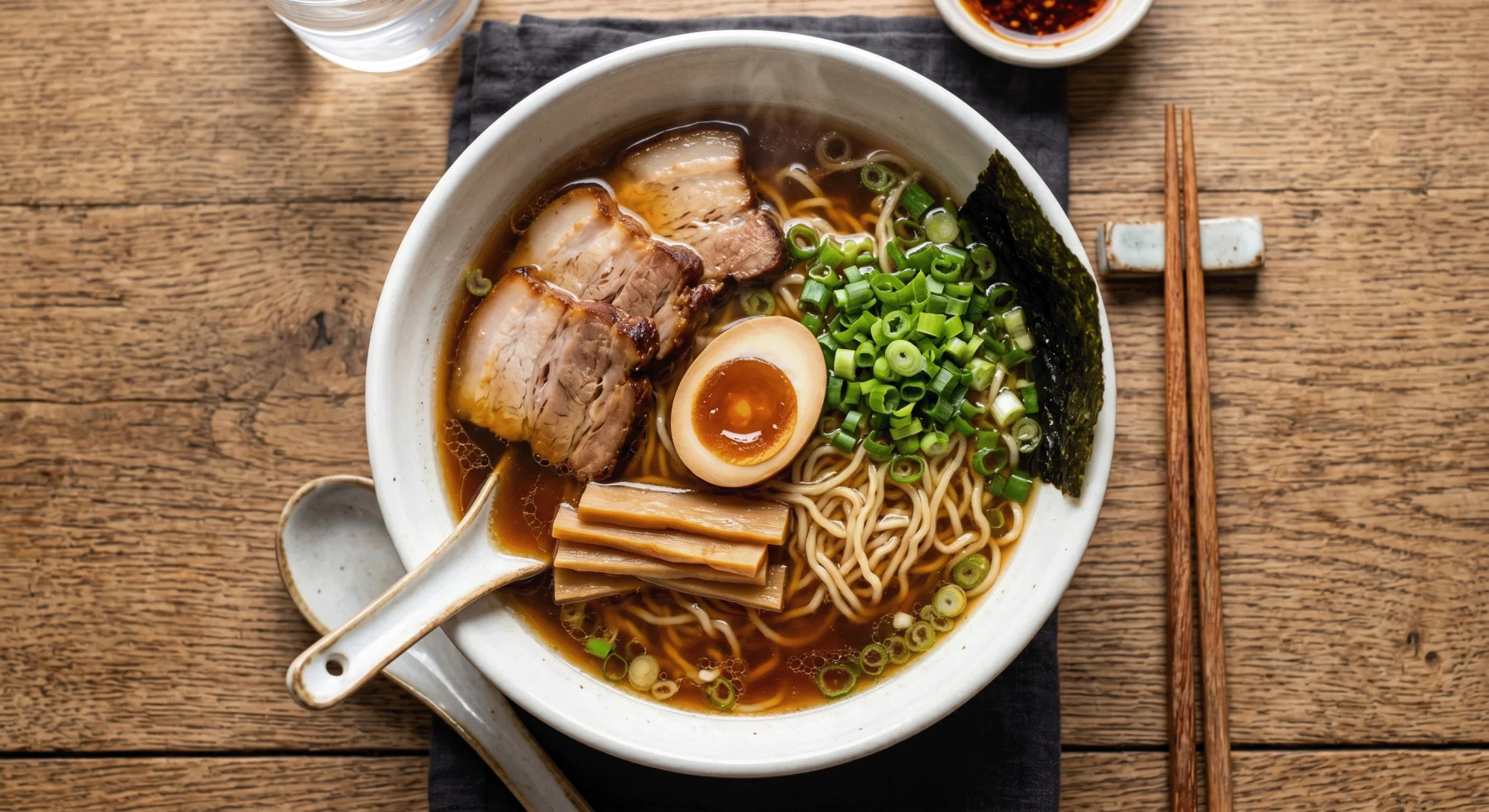
Authentic Shoyu Ramen
This authentic shoyu ramen recipe builds a deep, soy-rich Japanese broth over two days with rolled pork shoulder, jammy eggs, and springy noodles. Restaurant-quality at home!

By David Kim
May 17, 2026
Share this Recipe
Years ago, when my wife and I were still in the dating phase and I was very much trying to impress her, I decided to tackle authentic shoyu ramen at home. Not the instant kind from the campus bookstore — the real deal, with hand-tied pork shoulder, a slow-built kombu and bonito stock, and a soy-based tare that takes patience to do right. I spent two full days in the kitchen for what amounted to about twenty minutes of slurping bliss at the dinner table. She still talks about that bowl. To this day, whenever someone asks her about the best meals I've ever made for her, this authentic shoyu ramen is the first thing she mentions. That night taught me something I've carried into every recipe I've cooked since: some dishes are meant to be made slowly, deliberately, and with love. Ramen is one of them.
Authentic shoyu ramen is a study in contrasts and balance — a deeply savory soy-tinted broth that's both light on the palate and impossibly complex, supporting curly, springy noodles that snap back against the teeth with every bite. Crowning the bowl is rolled, slow-braised pork shoulder sliced into delicate medallions, a soft-yolked egg that runs gold when split, crisp scallions, and a sheet of nori standing at attention against the rim. Every component is built independently and then orchestrated together at the moment of serving, which is what gives authentic shoyu ramen its signature layered character.
What makes authentic shoyu ramen so special is the way each element is treated as its own little project. The broth pulls umami from three different sources — kombu, bonito flakes, and a long-simmered combination of pork and chicken bones — and then gets electrified by the tare, a concentrated soy-sake-mirin blend that's stirred into each individual bowl rather than the whole pot. The pork shoulder is tied tight so it cooks into uniform rounds, the eggs are timed to a precise jammy seven minutes, and the noodles are cooked à la minute so they never go soft. None of these steps are hard. They just take time and attention, which is exactly the point.
In modern food culture, ramen has graduated from college dorm survival food to one of the most celebrated and obsessed-over dishes in the world. Tonkotsu shops draw lines around the block in major cities, and chef-driven ramen joints have become destinations in their own right. Yet for all the hype around the restaurant scene, making ramen at home is having a moment too — home cooks are discovering that with a weekend of patience and a single trip to an Asian grocery, they can produce a bowl that genuinely rivals what's served in specialty shops. This recipe is for those weekends.
Why You'll Love This Recipe
- Restaurant-quality broth made entirely from scratch
- Tender, sliceable rolled pork shoulder with beautiful presentation
- Perfectly jammy seven-minute eggs every time
- Most of the work is hands-off simmering
- Impressive enough for a dinner party or special date night
- Components can be prepped ahead and assembled quickly to serve
What is Shoyu Ramen?
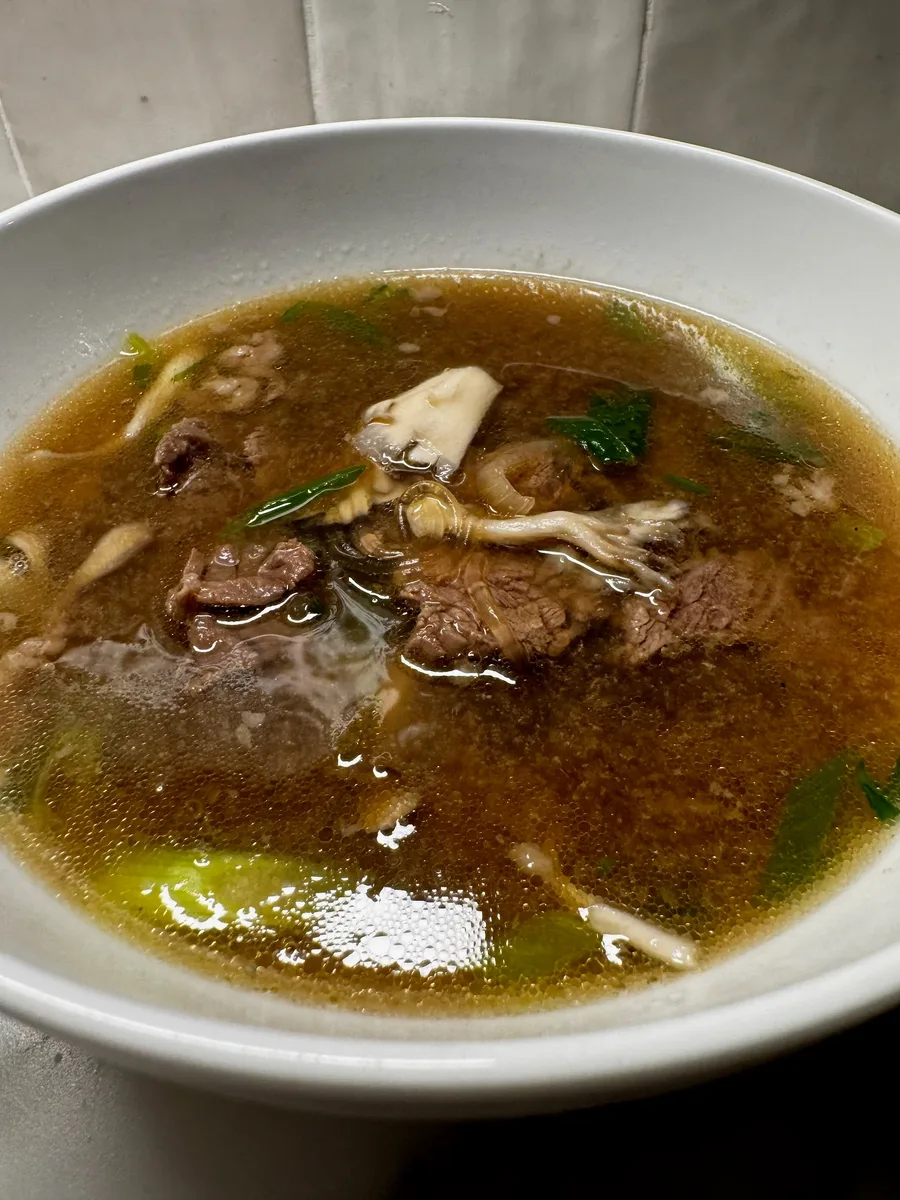
Shoyu ramen (醤油ラーメン) is one of the four classic styles of Japanese ramen, distinguished by its clear, soy sauce-flavored broth. The name "shoyu" literally means soy sauce, and the dish is defined by the use of a soy-based tare added to a rich umami stock. Unlike tonkotsu (pork bone) ramen, which is cloudy and creamy, shoyu ramen has a translucent amber broth that lets the cleaner, more refined flavors of the dashi shine through. It's typically served with curly wheat noodles, sliced braised pork (chashu), a soft-boiled egg, scallions, nori, and bamboo shoots (menma).
Key ingredients from this recipe include:
- Dried kombu
- Bonito flakes (katsuobushi)
- Sake
- Mirin
- Fresh ramen noodles (Sun Noodle brand recommended)
- Menma (fermented bamboo shoots)
- Nori sheets
- Shichimi togarashi
Need help with what ingredients to stock? Check out My Essential Korean Pantry article. This article describes each essential ingredient with links to where you can buy them easily!
Ingredients
-
For the Kombu Dashi (Day 1):
-
-
-
For the Tare (Day 1):
-
-
-
-
For the Pork Shoulder:
-
-
-
-
For the Stock (Day 2):
-
-
-
-
-
-
-
-
-
For Serving (Day Of):
-
-
-
-
-
-
Instructions
-
Day 1 — Build the Foundation
- 1
Wipe the kombu lightly with a damp cloth (do not rinse — you'll wash away the flavor). Place it in a large bowl with the cold water, cover, and let it steep at room temperature for at least 8 hours or overnight.
- 2
In a small bowl, whisk together the soy sauce, sake, and mirin to make the tare. Cover and refrigerate.
- 3
Generously season the pork shoulder with salt and pepper on all sides. Roll it into a tight log and tie with kitchen twine at 2-inch intervals to hold its shape. Wrap in plastic and refrigerate until tomorrow.
-
Day 2 — Cook the Stock and Pork
- 1
Heat the neutral oil in a large heavy pot (at least 8 qt) over medium-high heat. Add the tied pork shoulder and sear, turning every few minutes, until deeply browned on all sides, about 10-12 minutes.
- 2
Add the spareribs, chicken wings, scallions, carrots, garlic, ginger, and bonito flakes to the pot around the pork.
- 3
Lift the kombu out of the dashi and discard it. Pour as much of the kombu dashi into the pot as will fit (reserve the rest to add later).
- 4
Bring to a boil, then reduce to a bare simmer. Cook gently, uncovered, skimming any foam or fat from the surface as it accumulates and topping up with the reserved dashi as the liquid reduces. Simmer until the pork shoulder is fork-tender and the stock has reduced to about 2 qt, roughly 2.5 to 3 hours.
- 5
Carefully remove the pork shoulder and set it aside to cool. Once cool enough to handle, wrap tightly in plastic and refrigerate (chilling firms the meat so you can slice it cleanly).
- 6
Strain the stock through a fine-mesh sieve into another large pot or container. Discard the solids. Cover the strained stock and refrigerate overnight — this lets the fat solidify on top for easy removal and deepens the flavor.
-
Day Of — Cook, Slice, and Assemble
- 1
Bring a medium pot of water to a boil. Lower in the eggs one at a time and boil exactly 7 minutes. Immediately transfer to an ice bath. Once cold, peel carefully and set aside.
- 2
Remove the twine from the pork shoulder and slice it into thin rounds, about 1/4-inch thick. Set aside.
- 3
Skim the solidified fat off the top of the chilled stock (reserve a little if you like a richer bowl). Bring the stock to a hard simmer in a large pot.
- 4
While the stock heats, bring another large pot of water to a boil and cook the ramen noodles according to package directions until just al dente. Do not salt the water — ramen noodles already contain plenty.
- 5
Drain the noodles immediately and divide them among 6 deep bowls.
- 6
Spoon 2 to 3 tablespoons of tare into each bowl. Arrange a small fan of sliced pork to one side of the noodles, then ladle the hot stock over the top — the liquid should just reach the level of the noodles, not drown them.
- 7
Halve the eggs lengthwise and tuck them into the bowl next to a small pile of menma. Add sliced scallions, slip a half-sheet of nori between the noodles and the rim of the bowl so it peeks out, and finish each bowl at the table with chili oil, sesame oil, and a pinch of shichimi togarashi to taste.
Recipe Notes
RECIPE TIPS
- Don't skip rinsing the kombu with a damp cloth — wiping is fine, but never wash or soak before steeping
- Tie the pork shoulder tightly; loose twine means uneven, ragged slices
- Skim aggressively during the simmer for a cleaner, clearer broth
- Cool the pork fully before slicing for clean, restaurant-style medallions
- Cook noodles right before serving — they go from perfect to mushy in under a minute
- The tare is potent; start with 2 tbsp per bowl and add more to taste
- A 7-minute egg is the sweet spot for jammy yolks; set a timer and don't guess
SERVING SUGGESTIONS
Serve with:
- Gyoza or pork-shrimp dumplings on the side
- A simple cucumber sunomono salad to cut the richness
- Cold Japanese beer or barley tea (mugicha)
- A small dish of pickled ginger or quick-pickled radish
- Extra chili oil and shichimi togarashi at the table for customizing
VARIATIONS
- Use chicken thighs instead of pork shoulder for a lighter take
- Add corn kernels and a pat of butter for a Sapporo-style finish
- Swap menma for blanched bean sprouts or wilted spinach
- Top with a drizzle of black garlic oil (mayu) for a deeper, smokier bowl
- Substitute a mushroom-kombu dashi and crispy tofu for a vegetarian version
- Add a thin slice of narutomaki (fish cake) for a more traditional presentation
STORAGE
- Strained stock keeps in the refrigerator for up to 5 days or frozen for up to 3 months
- Cooked pork shoulder, wrapped tightly, keeps for 3 days refrigerated
- Tare keeps indefinitely in a sealed container in the fridge
- Eggs are best cooked the day of serving, but can be made up to 1 day ahead (store unpeeled in cool water)
- Do not store cooked noodles in broth — they will turn mushy. Cook noodles fresh for each serving.
Nutrition Facts
Per serving
* Nutritional values are estimates and may vary based on ingredients used.